
Play Aviator Now!
Home → Auto Cashout
Aviator Auto Cashout
Auto cashout in Aviator
The auto cashout feature in Aviator closes a bet automatically at a chosen multiplier, effectively removing reaction time from the outcome while leaving the built-in edge unchanged. This mechanism allows players to set specific thresholds without manual intervention during the rising multiplier phase of the round. The theoretical return over a very long run remains 97.00%, ensuring the house edge stays fixed at 3.00% regardless of automation settings. Using this tool requires discipline, as it does not alter the mathematical probability of the plane flying away before the target is reached.
Aviator round parameters
| Max multiplier | x1,000,000 |
| RTP | 97.00% |
| Bet range | 0.10 EUR / USD / GBP (varies by operator) - 100 EUR / USD / GBP (varies by operator) |
Aviator operates as a crash game where a plane flies upward while a multiplier rises continuously until it crashes unexpectedly. Players must cash out before this event occurs, and auto cashout serves as a safety net for those who prefer predefined limits. Spribe designed this title with provably fair technology using SHA-256, combining server seeds with client seeds plus a nonce for transparency. Certified by iTech Labs and BMM Testlabs, the game ensures that automated exits are processed instantly upon reaching the specified value.
Unlike traditional slots, Aviator has no reels, paylines, or spins, making its volatility entirely dependent on when the player chooses to exit. The maximum win potential stands at x1,000,000, offering significant rewards for those who successfully predict high multipliers before the crash. Operators may configure lower RTP values such as 96% or 94%, which directly impacts the long-term expected return for users. Understanding these configurations helps players manage their bankroll more effectively when utilizing the auto cashout function in real-time scenarios.
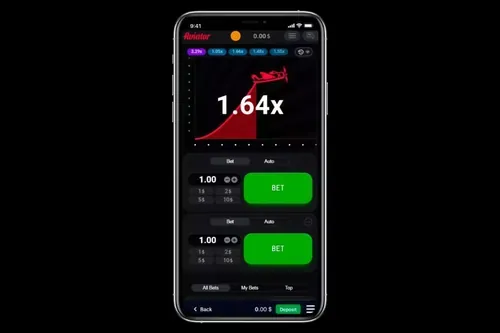
Setting a target multiplier
Setting a target multiplier in Aviator involves defining the exact point at which the rising curve should trigger an automatic withdrawal. This parameter is crucial because the game features a continuous multiplier that increases until the plane flies away unexpectedly. The theoretical return over a very long run is 97.00%, meaning the house edge remains constant at 3.00% across all strategies. Players can adjust this setting to match their risk tolerance, knowing that lower targets yield more frequent but smaller wins compared to higher risks.
Spribe developed Aviator with dual-bet mode, allowing players to place two separate bets with different target multipliers in a single round. This flexibility enables sophisticated staking plans where one bet secures profits while the other chases larger payouts up to x1,000,000. The multiplayer live bet feed displays these choices in real time, providing social context for individual decisions. Provably fair algorithms ensure that each round's outcome is independent and verifiable, maintaining integrity for all participants involved.
Comparing Aviator to Dice by Spribe highlights differences in volatility and max win caps; Dice offers adjustable volatility and a max win of x970. In contrast, Aviator provides a fixed theoretical return of 97.00% with a much higher potential payout ceiling of x1,000,000. Setting a target multiplier requires understanding these distinct mechanics, as chasing extreme values in Aviator carries significantly higher risk than in Dice. Players must balance ambition with the statistical reality that most rounds end well below the maximum possible multiplier.
Why automation removes hesitation
Automation removes hesitation in Aviator by executing trades at precise moments defined by the player rather than relying on split-second reactions. The auto cashout feature closes a bet automatically at a chosen multiplier, eliminating emotional decision-making during the critical final seconds of a round. This consistency helps maintain the theoretical return of 97.00% over hundreds of thousands of rounds, as human error often leads to premature exits or late withdrawals. The house edge of 3.00% remains unaffected by the method used to cash out, ensuring mathematical fairness across all play styles.
The rising multiplier in Aviator creates psychological pressure, as players fear missing out on higher gains while worrying about sudden crashes. By pre-setting targets, users bypass this anxiety, allowing them to stick to their strategy without second-guessing every tick of the counter. Spribe’s design incorporates this mechanic to appeal to both casual players and serious strategists seeking predictable outcomes. Certified by iTech Labs and BMM Testlabs, the platform guarantees that automated executions are accurate and timely, preserving trust in the system.
Unlike games with complex features, Aviator focuses on simplicity: a plane flies upward while a multiplier rises continuously until it ends. This straightforward structure makes automation particularly effective, as there are no bonus rounds or secondary bets to complicate the timing. Players can focus solely on managing their stake against the ever-increasing odds, knowing that their auto cashout will execute exactly as programmed. This clarity reduces stress and enhances the overall analytical approach to playing crash games like Aviator.
Low targets versus high targets
Low targets in Aviator typically involve setting auto cashout values between x1.10 and x2.00, securing frequent small wins to preserve capital. These conservative approaches align with the theoretical return of 97.00%, ensuring steady growth despite the inherent volatility of crash games. The house edge of 3.00% means that even with low-risk strategies, long-term profitability remains challenging without disciplined bankroll management. Players often use this method to extend gameplay duration while minimizing exposure to sudden losses caused by early crashes.
High targets, conversely, aim for multipliers closer to the maximum win cap of x1,000,000, requiring patience and acceptance of frequent total losses. Such aggressive strategies test the limits of the auto cashout feature, as waiting for rare high-value outcomes demands significant resilience. While the potential reward is substantial, the probability of success diminishes rapidly as the target increases beyond standard ranges. Operators may offer lower RTP configurations like 96% or 94%, further impacting the viability of chasing extreme multipliers over time.
Comparing Aviator to Dice reveals contrasting risk profiles; Dice allows adjustable volatility with a max win of x970, whereas Aviator offers fixed mechanics. Choosing between low and high targets depends on whether players prioritize consistent returns or occasional large payouts. The multiplayer live bet feed shows how others balance these extremes, providing insights into community preferences and common strategies. Ultimately, the decision hinges on personal risk tolerance and the ability to withstand the variance inherent in crash game dynamics.
Choosing a cashout target
The theoretical RTP of Aviator stands at 97.00%, establishing a house edge of 3.00% for the operator over extended play sessions. This percentage represents a long-run average across hundreds of thousands of rounds rather than a guarantee for individual gaming periods. Players must understand that this mathematical baseline influences their strategic decisions regarding when to secure profits during each round.
Spribe, the developer behind Aviator, offers a maximum win cap of x1,000,000 for players who successfully predict high multiplier outcomes. Achieving such extreme returns requires patience and precise timing as the plane continues its upward trajectory without crashing prematurely. Operators may configure lower RTP settings like 96% or 94%, which directly reduces the expected return on investment for participants.
Comparing Aviator to Plane Game reveals identical RTP figures of 97.00%, yet both titles maintain high volatility characteristics that impact payout frequency. The dual-bet mode allows users to place two simultaneous wagers with distinct auto cashout targets to manage risk exposure effectively. This feature provides flexibility in choosing between safer early exits and riskier attempts to chase larger multipliers before the crash occurs.
Aviator: key facts
| Parameter | Value |
|---|---|
| Game | Aviator |
| Studio | Spribe |
| Released | 2019 |
| RTP | 97.00% |
| House edge | 3.00% |
| Max win | x1,000,000 |
Frequency against payout size
Aviator operates as a crash game with no reels, paylines, or traditional spins, relying entirely on a rising multiplier that ends abruptly. The provably fair mechanism uses SHA-256 hashing to combine server seeds with client seeds and a nonce for transparency. This cryptographic verification ensures that neither the operator nor the player can manipulate the outcome of any given round beforehand.
Certification by iTech Labs and BMM Testlabs confirms that Aviator meets strict regulatory standards for randomness and fairness in online gambling. These audits verify that the random number generator functions correctly without bias toward either the house or the participant. Such independent verification builds trust among users who demand transparent and auditable gaming environments from reputable providers like Spribe.
When comparing Aviator to other instant games, the absence of physical symbols or spinning reels distinguishes it from traditional slot machines. The multiplayer live bet feed shows real-time wagering activity, allowing participants to observe collective behavior and adjust their own strategies accordingly. This social element adds a layer of engagement that pure single-player crash games typically lack in their standard interface designs.
Testing targets in demo
Auto cashout functionality in Aviator closes a bet automatically at a chosen multiplier, removing reaction time from the final outcome calculation. While this tool aids discipline, it does not alter the built-in house edge of 3.00% inherent to the 97.00% RTP structure. Users should recognize that automation simplifies execution but cannot overcome the mathematical disadvantage present in every single wager placed.
Spribe designed Aviator with a dual-bet mode that permits two concurrent wagers within a single round of gameplay for strategic diversification. One bet might utilize a conservative auto cashout target while the second pursues higher multipliers for potentially larger payouts. This setup allows players to hedge their risks by securing some returns early while leaving another portion exposed to greater volatility.
Testing these configurations in demo mode helps users understand how the continuous rise of the multiplier interacts with their chosen exit points. Since there are no reels or symbols, success depends solely on timing the withdrawal before the plane flies away unexpectedly. Observing patterns in crash points across multiple rounds provides insight into the unpredictable nature of this specific instant game format.
Adjusting after a losing streak
A losing streak in Aviator does not change the fixed 97.00% RTP or the constant 3.00% house edge maintained by the operator. Each round remains an independent event governed by the provably fair algorithm, meaning previous losses have no influence on future outcomes. Players often mistakenly believe in due corrections, but the mathematics of the game ensure that past results do not dictate upcoming probabilities.
The maximum win potential of x1,000,000 serves as a theoretical ceiling that few players will ever reach during standard gaming sessions. Chasing this ultimate prize often leads to increased exposure to the house edge without improving the statistical likelihood of success. Responsible bankroll management suggests accepting smaller, more frequent wins rather than risking entire balances on rare high-multiplier events that rarely materialize.
Comparing Aviator to Plane Game highlights similar volatility profiles where high-risk strategies yield infrequent but substantial payouts for those willing to wait. Both titles rely on the same core mechanic of predicting when a rising curve will terminate, requiring disciplined decision-making under pressure. Understanding this similarity helps players transfer effective risk management techniques between different instant games offered by various operators in the market.
When to turn automation off
Manual control over Aviator allows players to react dynamically to the rising multiplier, offering a sense of agency absent in fully automated modes. However, this engagement comes with the risk of delayed reactions that can result in losing the entire wager if the plane crashes too quickly. The 97.00% RTP remains constant regardless of whether the user employs auto cashout or relies on human reflexes to secure profits.
Spribe’s implementation of the live bet feed enables participants to see others’ actions, which can psychologically influence the decision to disengage automation. Watching peers cash out early might encourage manual intervention to mimic perceived safe strategies, even if such behavior lacks mathematical justification. This social pressure is a key factor in determining when users might prefer to take direct control of their betting process.
The certification by BMM Testlabs guarantees that manual inputs are processed with the same integrity as automated triggers within the game engine. Whether using auto cashout or clicking manually, the underlying SHA-256 protocol ensures that the outcome remains unbiased and unpredictable. Players should choose the method that best aligns with their personal risk tolerance and comfort level regarding speed versus control in gameplay.
Double bet setups
Aviator by Spribe allows players to place two simultaneous bets within a single round, creating a structured approach to risk management. This dual-bet mode enables users to allocate capital across different strategies while the plane rises and the multiplier increases continuously during the gameplay session. The mechanic supports varied staking patterns without altering the underlying game physics or the theoretical return percentage of 97.00% for the overall experience.
This configuration differs significantly from Tower Rush by Galaxsys, which limits wins to a maximum of 100x per round, whereas Aviator offers a potential payout cap of x1,000,000. Players can adjust their stake sizes independently for each bet lane, allowing for precise control over exposure during the volatile rising phase of the multiplier curve. Such flexibility is unique to crash games and unavailable in traditional slot formats that rely on fixed paylines and static symbol combinations for outcomes.
The provably fair system ensures transparency for both bets through SHA-256 hashing, combining server seeds with client seeds and a nonce to verify each outcome. Certification by iTech Labs and BMM Testlabs confirms that the randomness governing the crash point remains unbiased regardless of the number of active wagers placed simultaneously. Consequently, players can trust that their dual-position strategy faces no hidden algorithmic disadvantages compared to single-bet scenarios in other instant casino titles.
Splitting stakes across two bets
Spribe’s design permits splitting total bankroll into two distinct wagering positions, ensuring that a loss on one side does not necessarily result in a total capital depletion. By dividing stakes, players can hedge against the inherent volatility of the rising multiplier, securing partial returns even if the second bet crashes prematurely before cashing out. This method relies on the game’s continuous upward trajectory, where timing the exit determines whether the split strategy yields a net positive or negative financial result.
Unlike Tower Rush by Galaxsys, which caps winnings at 100x, Aviator’s potential for a x1,000,000 max win means that a successful high-stake split can generate substantial profits quickly. The RTP of 97.00% applies to the aggregate behavior over millions of rounds, meaning short-term splits may deviate significantly from this theoretical long-run average due to variance. Operators may also configure lower RTPs of 96% or 94%, directly impacting the expected value of each individual split wager placed during a gaming session.
Auto cashout features allow users to pre-set specific multiplier targets for each of the two bets, removing emotional decision-making from the execution phase. This automation closes bets automatically at chosen multipliers, ensuring discipline but not changing the built-in house edge of 3.00% inherent to the game’s mathematical model. Players must recognize that while splitting stakes manages risk, it does not eliminate the possibility of rapid losses if both automated exits trigger too early or too late.
Combining a safe and a risky target
A common strategy in Aviator involves pairing a low-multiplier auto-cashout with a higher-risk manual bet, aiming to cover costs while chasing larger payouts. The safe bet might target a multiplier just above 1.00x to guarantee frequent small wins, while the risky bet seeks to ride the wave toward significant multipliers. This dual approach leverages the game’s multiplayer live bet feed, allowing players to observe crowd behavior and potentially adjust their own targets based on real-time data trends.
This hybrid method contrasts with Tower Rush by Galaxsys, where the max win of 100x limits the upside potential of any high-risk component within the combined strategy. In Aviator, the theoretical RTP of 97.00% suggests that over time, the frequent small wins from the safe bet should offset some losses from the risky attempts. However, operators may offer versions with reduced RTPs of 96% or 94%, which would diminish the long-term profitability of such balanced staking approaches significantly.
The provably fair mechanism ensures that the crash point is determined before the round begins, making it impossible to predict exactly when the plane will fly away. Certification by iTech Labs and BMM Testlabs verifies that the server seed and client seeds combine correctly via SHA-256 to produce unbiased results for all participants. Consequently, players cannot exploit timing gaps between the start and the crash, forcing reliance on statistical probability rather than predictive skill to maintain a positive balance.
Limits of any automated plan
Automated plans in Aviator, such as predefined auto-cashout levels, remove reaction time from the outcome but do not alter the fundamental house edge of 3.00%. While these tools provide discipline and prevent impulsive decisions during the rapid rise of the multiplier, they cannot overcome the negative expected value dictated by the game’s mathematics. Players relying solely on automation must accept that long-term profitability is statistically improbable given the built-in advantage held by the operator across all rounds played.
Compared to Tower Rush by Galaxsys, which has a strict max win limit of 100x, Aviator’s potential for a x1,000,000 payout offers greater variance for those who manually intervene. However, the theoretical RTP of 97.00% remains constant regardless of whether bets are placed manually or via auto-settings, meaning automation does not improve the underlying odds. Some operators may configure lower RTPs of 96% or 94%, further reducing the effectiveness of any automated strategy aimed at preserving bankroll over extended periods.
The provably fair system using SHA-256 hashing guarantees that each crash point is random and independent, rendering pattern recognition ineffective for predicting future outcomes. Certification by iTech Labs and BMM Testlabs confirms that the combination of server seeds, client seeds, and nonces produces verifiable fairness without human interference. Therefore, no automated plan can consistently beat the house edge, and players should view such tools as risk management aids rather than guaranteed profit generators.
What automation cannot fix
Automation in Aviator cannot correct the inherent disadvantage posed by the 3.00% house edge, which ensures that the casino retains a portion of all wagers over time. Even with precise auto-cashout settings targeting specific multipliers, the mathematical expectation remains negative, meaning consistent long-term gains are unattainable through mechanical repetition alone. Players must understand that while tools like auto-cashout close bets automatically, they do not change the underlying probability distribution governing the crash events.
Unlike Tower Rush by Galaxsys, which caps max wins at 100x, Aviator’s potential for a x1,000,000 payout introduces extreme variance that automation struggles to manage effectively. The theoretical RTP of 97.00% indicates that for every 100 units wagered, only 97 units are returned on average, a gap that no software setting can bridge. Operators may also deploy versions with reduced RTPs of 96% or 94%, exacerbating the difficulty for any player attempting to sustain profitability through automated betting sequences.
The use of SHA-256 hashing to combine server seeds, client seeds, and a nonce ensures that each round’s outcome is truly random and unpredictable by design. Certification by iTech Labs and BMM Testlabs validates this integrity, preventing any exploitation of timing delays or system flaws to gain an unfair advantage. Consequently, players relying on automation face the same mathematical reality as manual players: the house always holds an edge that cannot be eliminated by technological assistance.
DemoRTP & VolatilityHow to PlayAuto CashoutStrategyBonusesMobileDownload & AppMax WinSimilar GamesReviewFAQSitemap
Aviator 2026