
Play Aviator Now!
Home → Strategy
Aviator Strategy
Approaching Aviator sensibly
Aviator, developed by Spribe in 2019, operates as a crash game with no reels or paylines, relying on a rising multiplier that players must cash out before the plane flies away. This mechanic differs fundamentally from slots, which use spinning reels and fixed paylines to determine outcomes, making traditional slot strategies irrelevant here. The theoretical RTP of 97.00% represents the long-term return over hundreds of thousands of rounds, not a guarantee for any single session. A lower configuration of 94% may also exist at some operators, directly increasing the house edge to 6.00% compared to the standard 3.00%. Players should recognize that the Provably Fair system using SHA-256 ensures transparency but does not alter the mathematical disadvantage inherent in every round.
The maximum win cap of x1,000,000 sets the upper limit for payouts, yet achieving this requires surviving extreme volatility without crashing prematurely. Unlike Dice by Spribe, which offers an adjustable volatility setting and a max win of x970, Aviator forces players to accept the built-in risk profile without customization options. This lack of control means bankroll management becomes the primary tool for longevity rather than strategic adjustments to game mechanics. Understanding that the house edge remains constant regardless of bet size helps maintain realistic expectations about potential returns. Relying on luck alone ignores the statistical reality that the casino retains its advantage over time.
Certification by iTech Labs and BMM Testlabs confirms that the random number generation meets industry standards for fairness and integrity. These audits verify that the server seed combined with client seeds produces unpredictable results, preventing manipulation of the crash point. Such verification provides confidence that the game functions as advertised, though it does not influence the expected value of each wager. Comparing this to other instant games highlights the importance of verifying regulatory compliance before depositing funds. Trust in the platform's security infrastructure supports responsible play by ensuring transparent operation.
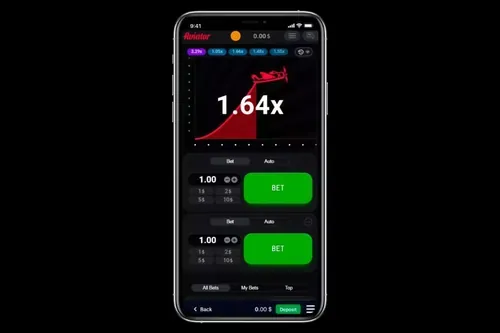
Bankroll rules that hold up
A defined bankroll serves as the financial boundary for playing Aviator, separating gambling funds from essential personal finances. Without a strict limit, players risk depleting resources faster due to the rapid pace of crash rounds compared to slower slot spins. The 300% welcome bonus up to €2,000 plus 100 free spins offers additional playing capital, but these funds often come with wagering requirements that restrict immediate withdrawal. Converting bonus money into withdrawable cash typically demands significant turnover, such as 40 times the bonus amount, which equals €80,000 in total bets. This high threshold discourages casual use of promotional offers unless the player intends extended engagement with the game.
Flat betting, where the same stake is placed every round, minimizes variance and extends playtime by avoiding large fluctuations in balance. Progressive staking, which increases bets after losses, accelerates depletion because it does not change the house edge and only shortens the time to ruin. For example, starting with a €100 bankroll and doubling stakes after each loss leads to bankruptcy within ten consecutive crashes, a frequent occurrence in crash games. Maintaining consistent wagers allows the theoretical RTP of 97.00% to function as intended over a larger sample size. Deviating from flat betting introduces unnecessary risk that outweighs any perceived benefit from chasing wins.
Dual-bet mode enables simultaneous wagers, effectively doubling the exposure per round while offering independent cashout points for each bet. This feature requires careful allocation of the total bankroll across both positions to prevent excessive concentration of risk on a single outcome. Managing two active bets simultaneously increases cognitive load and decision fatigue, potentially leading to delayed cashouts and higher losses. Setting predefined limits for each bet ensures disciplined execution even during fast-moving rounds. Proper bankroll segmentation supports sustainable play by balancing opportunity against protection.
Bet sizing against volatility
Volatility in Aviator refers to the frequency and size of payout swings, determined by the random crash point generated via SHA-256 hashing. High volatility means longer waits between multipliers exceeding x2, requiring patience and smaller bets to survive dry spells. In contrast, Dice by Spribe allows players to adjust volatility settings, offering flexibility that Aviator lacks entirely. Since Aviator’s volatility is fixed, bet sizing must compensate for unpredictability by reducing stake amounts during uncertain periods. Adjusting wagers based on recent performance trends fails because each round remains statistically independent of previous outcomes.
Auto cashout functionality permits presetting a multiplier threshold, automatically securing profits if the plane reaches that level before crashing. Setting this parameter removes emotional decision-making and enforces discipline by executing trades according to pre-defined criteria. For instance, configuring auto cashout at x2 guarantees a profit if the multiplier hits that target, though frequent early crashes may result in small net losses over time. Combining manual and auto cashouts in dual-bet mode allows partial profit-taking while leaving room for higher gains on the second bet. This hybrid approach balances security with upside potential without altering the underlying odds.
Smaller bet sizes reduce the impact of variance, allowing the theoretical RTP of 97.00% to manifest more accurately over extended sessions. Large bets amplify both wins and losses, increasing the likelihood of rapid bankroll exhaustion due to the absence of protective mechanisms like paylines. The maximum win of x1,000,000 remains inaccessible through aggressive staking alone, as the probability of reaching such multipliers decreases exponentially. Consistent application of modest stakes aligns with responsible gaming principles by prioritizing longevity over speculative highs. Sustainable play depends on accepting modest returns rather than pursuing unrealistic jackpots.
Session limits worth setting
Time-based session limits prevent prolonged exposure to the house edge, preserving mental clarity and financial stability during gameplay. Playing Aviator continuously without breaks increases the risk of impulsive decisions driven by fatigue or frustration. Unlike slots, which may allow intermittent pauses between spins, crash games demand constant attention due to their rapid round progression. Establishing a fixed duration, such as one hour, ensures regular evaluation of performance and adherence to budget constraints. Regular intervals provide opportunities to assess whether current strategies remain effective or require adjustment.
Loss limits define the maximum acceptable reduction in bankroll before terminating a session, protecting against catastrophic depletion. Setting a loss cap at 20% of the initial bankroll ensures that setbacks remain manageable and recoverable over subsequent visits. Without such boundaries, players may continue betting beyond rational limits in hopes of reversing negative trends, a behavior exacerbated by the dual-bet mode’s complexity. Monitoring cumulative losses against predetermined thresholds reinforces discipline and prevents emotional escalation. Adhering to loss limits transforms gambling from a reactive activity into a controlled exercise in risk management.
Win targets establish clear objectives for ending sessions positively, locking in profits before volatility erodes gains. Achieving a predetermined profit goal, such as 50% of the starting bankroll, signals successful execution of the chosen strategy. However, exiting too early may forfeit potential higher returns available in later rounds, creating tension between security and ambition. Balancing win targets with realistic expectations acknowledges that sustained profitability remains unlikely due to the house edge. Strategic exits support long-term sustainability by recognizing when favorable conditions have temporarily aligned.
Why chasing losses fails
Chasing losses involves increasing bet sizes after defeats to recoup previous deficits quickly, a strategy doomed to fail due to the unchanging house edge. Each round in Aviator operates independently, meaning past outcomes provide no predictive power for future results. Attempting to recover lost funds through larger wagers amplifies risk without improving odds, accelerating bankroll depletion. The theoretical RTP of 97.00% applies equally to small and large bets, rendering progressive staking ineffective over time. Recognizing this mathematical truth helps players avoid destructive patterns that lead to financial harm.
Emotional responses to losing streaks often drive irrational behavior, such as abandoning predefined strategies in favor of spontaneous high-risk bets. The multiplayer live bet feed displays real-time actions of other players, creating social pressure to match aggressive tendencies observed in others. Resisting this influence requires maintaining focus on individual goals rather than reacting to external stimuli. Ignoring collective behavior preserves autonomy and reduces susceptibility to herd mentality. Discipline in adhering to original plans mitigates the psychological trap of chasing losses.
Accepting losses as part of the natural variance inherent in crash games fosters resilience and promotes healthier attitudes toward gambling. Viewing each round as an isolated event detached from previous outcomes encourages objective analysis of performance metrics. Comparing results to benchmarks like the 3.00% house edge provides context for interpreting short-term fluctuations accurately. Acknowledging limitations prevents unrealistic expectations and supports informed decision-making moving forward. Embracing uncertainty strengthens mental fortitude and enhances overall gaming experience.
Aviator: key facts
| Parameter | Value |
|---|---|
| Game | Aviator |
| Studio | Spribe |
| Released | 2019 |
| RTP | 97.00% |
| House edge | 3.00% |
| Max win | x1,000,000 |
Common systems and their limits
The theoretical RTP of 97.00% for Aviator by Spribe establishes a baseline house edge of 3.00% over millions of rounds. This mathematical constant remains immutable regardless of the betting pattern chosen by the player during gameplay sessions. Consequently, no strategy can alter the long-term expected return or eliminate the inherent casino advantage built into the game mechanics.
Operators may configure lower RTP settings such as 96% or 94%, which directly increases the house edge beyond the standard 3.00% figure. Players must verify the specific configuration active on their platform before engaging in any wagering activity to understand the true cost of play. This variance significantly impacts the bankroll sustainability and overall profitability expectations for casual versus high-volume participants over extended periods.
Aviator differs fundamentally from slot machines that rely on random number generators for symbol combinations across fixed paylines and spinning reels. As a crash game, it utilizes a rising multiplier mechanic where players must cash out before the plane flies away to secure winnings. This structural difference removes traditional volatility metrics associated with reel-based games and replaces them with timing-based risk assessment challenges.
Flat betting explained
Flat betting involves placing the identical stake amount during every single round of the Aviator crash game session without variation. This approach maintains a steady burn rate against the 3.00% house edge derived from the 97.00% theoretical RTP provided by Spribe. It prevents rapid depletion of the bankroll compared to aggressive strategies while still adhering to the immutable mathematical disadvantage over time.
The maximum win cap of x1,000,000 applies equally to flat bettors who consistently choose smaller stakes versus those risking larger amounts per round. Since the multiplier rises continuously until a random crash point determined by SHA-256 provably fair algorithms, the payout potential remains theoretically unlimited. However, the probability of reaching extreme multipliers decreases exponentially, making consistent small wins more likely than massive jackpot hits.
Unlike progressive systems that adjust stakes based on previous outcomes, flat betting ignores the history of crashes and successful cashouts entirely. This method aligns with the independent nature of each round generated by server seeds and client nonce combinations certified by iTech Labs. Players relying on this technique accept the slow erosion of funds due to the 3.00% edge without attempting to chase losses through increased wagers.
Progressive staking risks
Progressive staking requires raising stakes after losses in an attempt to recover previous deficits within the Aviator crash game environment quickly. This method does not change the built-in 3.00% house edge derived from the 97.00% RTP and only shortens the time to ruin significantly. The exponential growth of required bets eventually exceeds table limits or bankroll capacity when facing extended losing streaks common in high-volatility scenarios.
Spribe's dual-bet mode allows players to place two simultaneous wagers, but doubling both stakes after a crash accelerates financial exposure dramatically. If a player loses both bets consecutively, the cumulative deficit grows faster than with single-stake progressive systems like Martingale variations. The maximum win cap of x1,000,000 cannot rescue a bankrupt account formed by unsustainable stake escalation during volatile multiplier swings.
Provably fair technology ensures that each crash point is randomly determined by SHA-256 hashes, making outcome prediction impossible for any staking system. Claims that progressive methods overcome the 3.00% house edge are mathematically false because the expected value remains negative regardless of bet sizing. Players using this approach often experience rapid bankroll depletion despite occasional large wins that mask the underlying statistical disadvantage over thousands of rounds.
What the maths actually allows
The 97.00% RTP indicates that for every 100 units wagered, approximately 97 units are returned to players over hundreds of thousands of rounds. This theoretical average assumes perfect execution of optimal cashout strategies, which remain impossible to guarantee due to the random nature of crash points. The remaining 3.00% represents the guaranteed profit margin for operators configuring this specific Spribe title under standard regulatory parameters.
Lower RTP configurations at 96% or 94% shift additional value from players to the house, increasing the edge to 4.00% or 6.00% respectively. These variations do not affect the visual speed of the multiplier or the timing of the plane flying away but drastically reduce long-term returns. Savvy analysts recommend checking the specific game version to ensure alignment with the higher 97.00% standard before committing significant bankroll resources.
Certification by iTech Labs and BMM Testlabs verifies that the SHA-256 algorithm correctly generates unpredictable crash points without manipulation. This technical assurance protects players from rigged outcomes while confirming that the stated 97.00% RTP is mathematically achievable under ideal conditions. Understanding these verification processes helps users distinguish between legitimate crash games and unregulated alternatives lacking transparent provably fair mechanisms.
Reading variance honestly
High volatility in Aviator means that wins occur infrequently but can reach substantial sizes up to the x1,000,000 maximum win cap limit. This characteristic contrasts sharply with low-variance slots that offer frequent small payouts but rarely produce life-changing jackpots for the average participant. Players must possess sufficient bankroll resilience to withstand long dry spells where the multiplier consistently crashes before most cashout thresholds are reached.
The multiplayer live bet feed displays real-time stakes and cashout decisions, allowing observers to gauge community sentiment during each rising multiplier phase. However, following herd behavior often leads to suboptimal timing since collective actions do not influence the underlying SHA-256 determined crash point. Independent decision-making based on personal risk tolerance remains superior to mimicking others in a game governed purely by random probability distributions.
Auto cashout features enable preset multipliers to trigger withdrawals automatically, removing emotional interference from the critical decision-making process during rapid gameplay. This tool helps enforce discipline by locking in profits before unexpected crashes occur, though it also caps upside potential below the theoretical maximum. Utilizing this function alongside flat betting strategies provides a balanced approach to managing variance within the constraints of the 3.00% house edge.
Learning the game in demo first
Spribe released Aviator in 2019 as a crash title that operates without any reels or paylines, relying instead on a single rising multiplier. This theoretical return stands at 97.00%, establishing a house edge of exactly 3.00% over extended play sessions. Players should note that operators may configure lower returns such as 96% or even 94%. Consequently, the demo mode allows users to test these mechanics without risking real funds.
The core mechanic involves a plane flying upward while the multiplier rises continuously until it crashes. Unlike slots, this instant game features no spins and no symbols landing on a grid. The provably fair system uses SHA-256 combining server seeds with client seeds and a nonce. This transparency ensures that every round result is verifiable by independent auditors like iTech Labs.
Dual-bet mode lets players place two simultaneous wagers within a single round structure. Auto cashout functionality helps lock in profits before the inevitable crash occurs. Comparing this to Tower Rush from Galaxsys reveals different volatility profiles despite similar RTPs. Understanding these distinct features prepares users for the unique pace of this specific crash game format.
Adjusting stakes to your budget
The maximum potential win in Aviator reaches an impressive x1,000,000 multiplier on any single bet. This cap defines the absolute upper limit for payouts regardless of the stake size employed during the round. Players must manage their bankroll carefully because the high variance can deplete funds quickly. Flat betting strategies help stabilize losses compared to progressive staking methods that increase risk.
A 300% welcome bonus up to €2,000 plus 100 free spins offers initial playing capital. Such bonuses often come with wagering requirements that must be cleared before withdrawal eligibility. Aviator contributes differently to these requirements than standard slot games do in most casinos. Checking the specific terms prevents misunderstandings about how much turnover is needed to unlock winnings.
Tower Rush provides a stark contrast with its max win capped at just 100x per round. This limitation makes it unsuitable for players seeking the massive multipliers available in Aviator. The 97.00% RTP matches Aviator, yet the payout ceiling significantly alters the long-term value proposition. Choosing between these titles depends entirely on whether the player prioritizes frequency or magnitude of wins.
Recognising a bad session
The theoretical return of 97.00% implies that over hundreds of thousands of rounds, losses accumulate steadily. A session where the balance drops below the initial deposit indicates negative variance against the mean. Progressive staking systems fail to change this built-in edge and only accelerate the time to ruin. Recognizing this mathematical reality helps players avoid chasing losses with increasingly larger bets.
If the multiplier frequently crashes before reaching even double digits, the session feels particularly harsh. This outcome aligns with the 3.00% house edge that slowly erodes the total bankroll over time. The live bet feed shows other players losing simultaneously, confirming that bad luck is not isolated. Accepting these results as part of the statistical distribution prevents emotional decision-making during downturns.
Comparing current performance to Tower Rush highlights how low caps limit recovery potential after a loss streak. With a max win of only 100x, one lucky round cannot offset significant prior deficits easily. Aviator’s higher ceiling offers more hope but requires stricter discipline to preserve remaining funds. Setting a strict stop-loss limit based on the initial bankroll size remains the only reliable defense.
Stopping while ahead
Securing a profit before the house edge takes over is the primary goal of disciplined play. If the bankroll increases significantly above the starting amount, cashing out preserves those gains effectively. The dual-bet mode allows one bet to secure small wins while the other chases higher multipliers. This strategy balances risk and reward while maintaining control over the overall session outcome.
Auto cashout settings enable players to define precise thresholds for locking in profits automatically. For example, setting a cashout at x2 ensures consistent small wins rather than waiting for huge multipliers. This method reduces exposure to the sudden crashes that characterize the game’s volatile nature. Consistent application of such rules leads to more predictable long-term financial results.
Unlike Tower Rush which caps wins at 100x, Aviator allows for exponential growth if timing is perfect. However, relying on rare large wins is statistically unsustainable compared to steady small gains. The 97.00% RTP means that holding onto profits longer eventually yields them back to the operator. Knowing when to end the session protects the player from giving back hard-earned earnings.
Responsible play in practice
The provably fair mechanism using SHA-256 ensures transparency but does not guarantee individual session success. Players must acknowledge that the 3.00% house edge guarantees profitability for the casino over time. Treating the game as entertainment rather than income source aligns with responsible gambling principles. Setting daily loss limits prevents accidental overspending during extended periods of engagement.
Using the demo mode provided by Spribe allows learning the interface without financial commitment initially. This practice phase helps users understand the speed and unpredictability of the rising multiplier curve. Transitioning to real money should only occur after mastering the auto cashout and dual-bet features. Responsible limits apply equally to both practice and actual monetary gameplay environments.
Comparing Aviator’s complexity to simpler games like Tower Rush shows why understanding rules is crucial. While Tower Rush has a straightforward 100x cap, Aviator’s dynamic multiplier requires constant attention. Ignoring the technical details of seed generation or audit certifications by BMM Testlabs risks blind trust. Informed players make better decisions regarding their bankroll management and session duration limits.
DemoRTP & VolatilityHow to PlayAuto CashoutStrategyBonusesMobileDownload & AppMax WinSimilar GamesReviewFAQSitemap
Aviator 2026